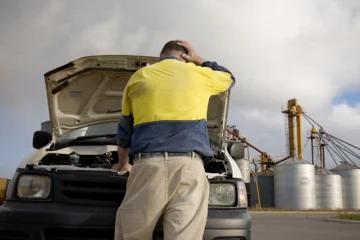
It Rarely Starts With Something Obvious
Most engine problems don’t begin with a breakdown – they begin with a feeling.
Not a loud noise.
Not a warning light right away.
Just something that feels… off.
Maybe your car hesitates slightly when you press the gas.
Maybe it jerks once and then drives fine.
A lot of drivers first notice it as
car hesitates when accelerating
or a subtle shake they can’t explain.
That’s often how a misfire begins.
What Is an Engine Misfire (In Simple Terms)
Your engine runs on timing and consistency.
Each cylinder fires in sequence:
- fuel enters
- air mixes
- spark ignites
- power is created
When everything works, it’s smooth.
A misfire happens when one of those steps fails.
One cylinder doesn’t fire correctly or doesn’t fire at all.
The engine doesn’t stop.
But it loses rhythm.
And that’s exactly what you feel.
Engine Misfire Symptoms (What It Actually Feels Like)
1. Jerking or Shaking While Driving
This is usually the first noticeable sign.
The car feels uneven—almost like it’s skipping a beat.
This is what most people describe as
car jerks while driving
2. Hesitation When Accelerating
You press the gas…
…and the car doesn’t respond right away.
That delay is subtle but important.
Closely related to
car hesitates when accelerating
3. Loss of Power
The car feels weaker than usual.
Especially when:
- going uphill
- accelerating harder
This connects directly to
car loses power while driving
4. Rough Idle
At a stoplight or while parked:
- the engine vibrates
- the car feels unstable
A smooth engine shouldn’t feel like that.
5. Fluctuating RPM
The RPM needle may:
- bounce slightly
- feel inconsistent
This is a subtle but important sign.
6. Check Engine Light
Modern vehicles detect misfires quickly.
Common codes:
- P0300 (random misfire)
- P0301-P0308 (specific cylinder)
7. Engine Stalling (Advanced Stage)
If the misfire gets worse:
the engine may shut off
This is often linked to
car stalls while driving
How Misfires Progress Over Time
A misfire rarely stays the same.
It usually follows this pattern:
- slight hesitation
- occasional jerking
- noticeable power loss
- rough idle
- stalling
You can explore each stage in detail:
- car hesitates when accelerating
- car jerks while driving
- car loses power while driving
- car stalls while driving
What Causes an Engine Misfire?
A misfire isn’t a single problem, it’s a symptom.
1. Ignition Problems (Most Common)
If the spark is weak or mistimed:
fuel won’t ignite properly
Common causes:
- worn spark plugs
- failing ignition coils
2. Fuel Delivery Issues
The engine needs fuel at the right time.
If delivery is inconsistent:
- combustion becomes uneven
- misfires occur
Causes:
- clogged injectors
- weak fuel pump
3. Airflow Problems
Engines need proper airflow.
If airflow is restricted:
- combustion becomes inefficient
- engine performance drops
4. Sensor Failures
Modern cars rely on sensors.
If they send incorrect data:
- fuel mixture becomes wrong
- timing is affected
5. Mechanical Issues (Serious Cases)
Less common, but important:
- low compression
- valve damage
- head gasket problems
Can You Drive With an Engine Misfire?
Short answer:
Yes, for a short time
No, long term
Because misfires can:
- damage the catalytic converter
- increase fuel consumption
- worsen engine wear
Waiting always makes it more expensive.
How Mechanics Diagnose a Misfire
Step 1: Scan for Codes
Identifies affected cylinders.
Step 2: Check Ignition
- spark plugs
- ignition coils
Step 3: Inspect Fuel System
- injectors
- fuel pressure
Step 4: Evaluate Airflow
- intake system
- throttle body
Step 5: Compression Test
Checks internal engine health.
Diagnosis is about narrowing it down, not guessing.
What Does a Misfire Sound Like?
It’s not always loud but noticeable.
You might hear:
- uneven engine rhythm
- sputtering
- irregular exhaust sound
Will Changing Spark Plugs Fix a Misfire?
Sometimes.
If spark plugs are the issue:
replacing them can completely fix it
If not:
the problem will remain
Spark Plugs & Misfires (Quick Insights)
Signs Spark Plugs Need Replacement
- misfire
- rough idle
- poor acceleration
- reduced fuel efficiency
Spark Plug Lifespan
Typically:
30,000 to 100,000 miles
Should You Replace All Spark Plugs at Once?
Yes.
It keeps engine performance balanced.
Is It Worth Fixing a Misfire?
Yes, always.
Ignoring it leads to:
- bigger damage
- higher costs
- potential breakdown
Real-World Pattern
Most customers say: “It just started small”
Then:
- hesitation
- jerking
- power loss
By the time they act:
the issue has progressed
Vehicles Commonly Affected
- Honda Accord → ignition wear
- BMW 3 Series → sensor issues
- Ford F-150 → coil failures
- Nissan Altima → fuel injectors
- Chevy Malibu → airflow issues
Why Location Matters
Driving conditions affect performance:
- heat → stresses ignition
- cold → affects fuel
- traffic → increases wear
Common in:
- Dallas
- Chicago
- Phoenix
- Atlanta
Cost to Fix Engine Misfire
- spark plugs → $100-$300
- ignition coils → $150-$500
- injectors → $200-$600
- major repairs → $1000+
Early fixes are cheaper.
Engine Misfire – Common Questions
How does an engine misfire feel?
Jerking, hesitation, rough idle, and uneven power.
What is the most common cause?
Worn spark plugs or ignition coil issues.
Will a misfire throw a code?
Yes, most vehicles trigger a check engine light.
Can it fix itself?
No. It will worsen over time.
Related Problems You Might Notice
If your engine is misfiring, you may also experience:
- car hesitates when accelerating
- car jerks while driving
- car loses power while driving
- car stalls while driving
These are all connected symptoms.
Engine Is Misfiring? Get It Diagnosed
If your car is already showing these signs:
it’s time for a proper diagnosis
Instant Car Fix – No Guesswork
At Instant Car Fix:
- we diagnose accurately
- we fix the root cause
- we avoid unnecessary repairs
Final Thought
An engine misfire isn’t a random issue.
It’s a signal that something is no longer working in sync.
And when timing breaks down…
everything else follows.